

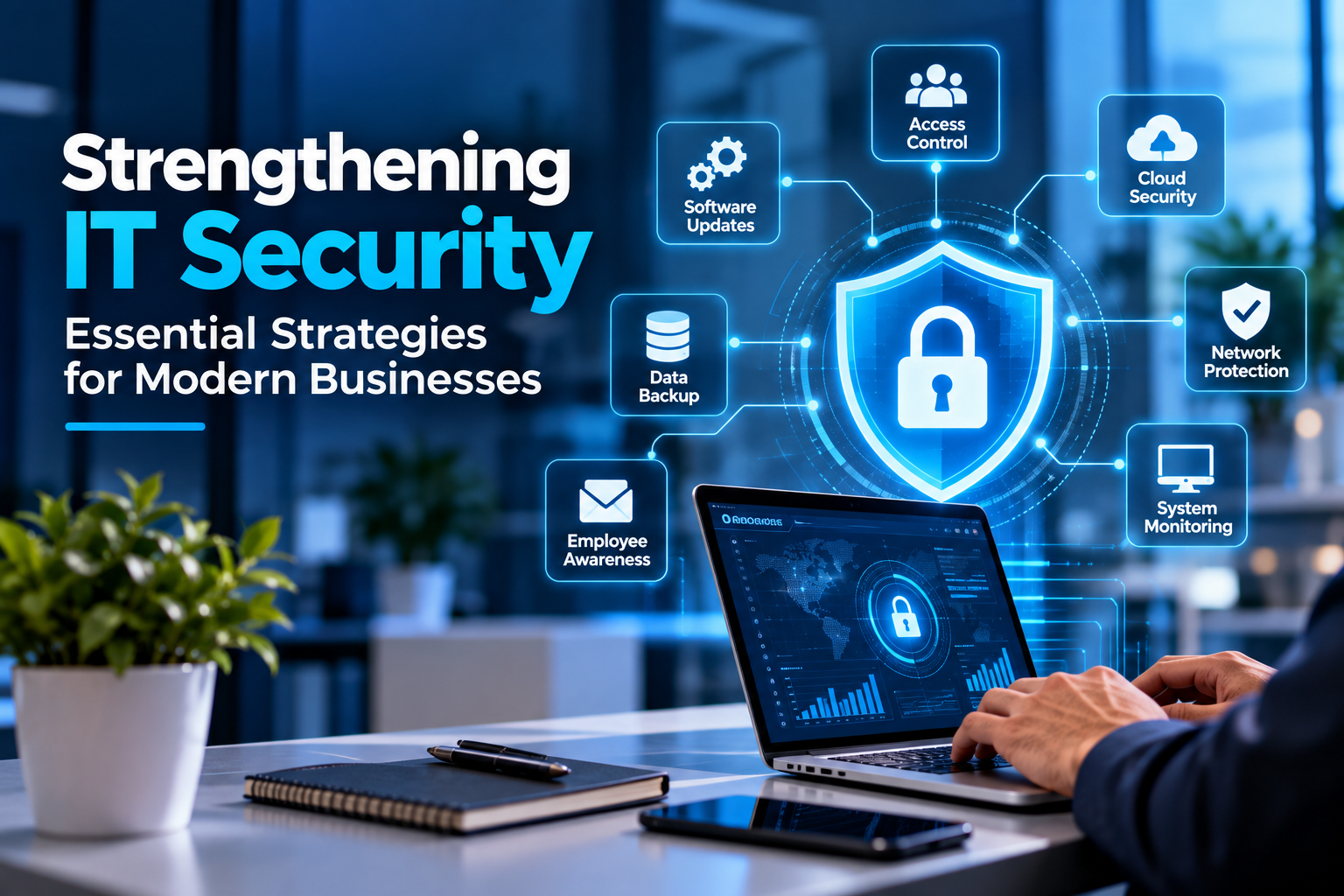
Technology has become an essential part of modern business operations. Companies rely on websites, cloud applications, databases, email systems, internal networks, and digital platforms to communicate with customers and manage everyday activities. As businesses become more dependent on technology, protecting digital systems and sensitive information becomes increasingly important. Strong IT security helps organizations reduce security risks, protect business data, and maintain reliable operations. A successful IT security strategy is not limited to installing antivirus software. It involves multiple layers of protection, including secure access, employee awareness, data backups, network security, monitoring, software updates, and incident response.
What Is IT Security?
IT security refers to the practices, technologies, and processes used to protect an organization's information systems, networks, applications, devices, and data from unauthorized access, misuse, disruption, or loss. Businesses may need to protect different types of information, including: Customer information Employee records Financial data Business documents Login credentials Intellectual property Application data Internal communications An effective security strategy combines technology with appropriate policies and employee practices.
1. Protect User Accounts and Access
User accounts are an important part of business security. If unauthorized individuals gain access to an employee account, they may be able to access company applications and information. Businesses should implement strong password policies and consider multi-factor authentication (MFA) for important systems. Role-based access can also help ensure that employees only have access to the information and applications required for their responsibilities. For example, an employee working in marketing may not need access to financial or administrative systems.
2. Keep Software and Systems Updated
Outdated software can expose businesses to known security vulnerabilities. Operating systems, applications, plugins, servers, and network devices should be updated regularly. Organizations should establish a process for monitoring available security updates and applying important patches in a timely manner. Regular updates can reduce exposure to vulnerabilities and help keep business systems more secure.
3. Secure Business Networks
Network security is another important part of IT security. Businesses should protect their internal networks, servers, Wi-Fi connections, and internet-facing systems. Security measures can include: Firewalls Secure Wi-Fi configurations Network segmentation VPNs where appropriate Intrusion detection and monitoring Secure router configurations Access controls Businesses should also regularly review network configurations and remove unnecessary services or access points.
4. Protect Business Data With Backups
Data loss can happen because of accidental deletion, hardware failure, software problems, security incidents, or other unexpected events. Regular backups provide businesses with a way to restore important information when needed. A backup strategy should identify which data needs to be backed up, how frequently backups should occur, where backups should be stored, and how restoration will be tested. Businesses should also protect backup systems from unauthorized access so that backups remain available when they are needed.
5. Train Employees on Security Awareness
Employees play an important role in protecting an organization's systems. Security awareness training can help employees recognize suspicious emails, phishing attempts, unsafe links, social engineering techniques, and other common security risks. Businesses can establish clear guidelines covering: Password security Phishing awareness Safe file sharing Device security Email security Handling sensitive information Reporting suspicious activity Regular awareness training can help create a stronger security culture across the organization.
6. Secure Cloud Applications
Many businesses now use cloud platforms for email, file storage, databases, applications, and collaboration. Cloud services should be configured carefully to protect business information. Organizations should review user permissions, enable appropriate authentication controls, monitor account activity, and ensure that sensitive data is handled according to internal security requirements. Cloud security should also be considered when employees access business applications from personal or remote devices.